Thursday, May 30, 2013

Tuesday, May 28, 2013
Daily Warm Up for Tuesday, 5/28
Take some virtual tours of Machu Picchu and write 5 quiz questions (and answers!) while you're at it!
The tours are on a sidebar on the left. Read about each area and pay particular to mentions of gods and myths.
Thursday, May 23, 2013
Wednesday, May 22, 2013
Daily Warm Up for Wednesday, 5/22
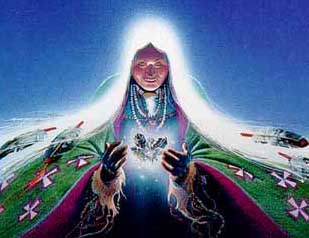
YOU WILL HAVE TO SIGN IN FOR THIS WARM UP!
Watch the video, then answer this question in a comment below (your response should be at least 4 complete sentences):
In which of the four worlds would you want to live? Why?
When you finish that, take some time to read some of the Native American myths on this page:
Tuesday, May 21, 2013
Monday, May 20, 2013
Friday, May 17, 2013
HW for Friday, 5/17
Celts packet 3, 5 quiz questions.
AND
Organize your binder for Monday's Northern Europe Quiz.
AND
Organize your binder for Monday's Northern Europe Quiz.
Thursday, May 16, 2013
HW for Thursday, 5/16
Read the Celts packet 2 and write 5 quiz questions with answers.
We will have a Northern Europe Quiz on Monday!
We will have a Northern Europe Quiz on Monday!
Wednesday, May 15, 2013
HW for Wednesday, 5/14
If you haven't finished parts 1-3 of your Norse God Portfolio, please do that tonight.
Click here for a link to the assignment sheet.
Please also complete any make-up work!
Click here for a link to the assignment sheet.
Please also complete any make-up work!
Monday, May 13, 2013
Friday, May 10, 2013
HW for Friday, 5/10
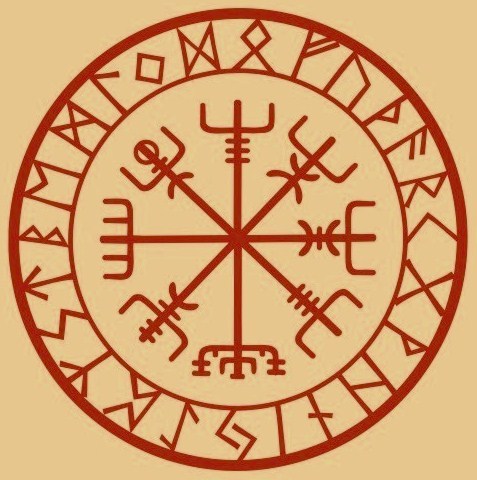
Complete the Norse Research worksheet.
Also, if you have not completed your Norse god/goddess collage and bio page, please do that this weekend.
Thursday, May 9, 2013
HW for Thursday, 5/9
In preparation for our trip tomorrow . . .
Choose 2 of the 4 paintings below. Read the Background section, then answer the Guided Practice Questions in complete sentences. Make sure to answer every single question! You will have to re-do incomplete answers and that will affect your grade.

BACKGROUND
Have you heard of Cupid, the baby god of love? This painting shows what can happen when Cupid’s arrows make love go wrong.
Daphne, a beautiful mountain nymph, had the bad luck of attracting the affection of Apollo, the god of reason, music, and poetry. Apollo was returning from slaying a monster named Python when he saw Cupid. Apollo bragged to Cupid that his bow was bigger than Cupid’s. Angered by the insult, Cupid shot him with a golden love arrow causing Apollo to fall in love with the first person he saw. Cupid then shot Daphne with a lead-tipped arrow causing her to be impervious to love. At that moment, Apollo caught sight of Daphne, who was out hunting, and fell in love. But Daphne was not interested. He began to chase her. Daphne, a superb athlete tried to run away, but she was no match for Apollo. He was close behind when she reached her father, the river god Peneus. (Note his symbols: a water urn, an oar, and a tiny waterfall at the left of the painting.) Hearing her cries for help, Peneus quickly transformed Daphne into a laurel tree. Seeing the havoc he caused, little Cupid hides behind Daphne’s white robes.
Apollo reached the tree and, still enamored with Daphne, he mourned, as Ovid wrote in the Metamorphoses:
Fairest of maidens, you are lost to me. But at least you shall be my tree. With your leaves my victors shall wreathe their brows. You shall have your part in all my triumphs. Apollo and his laurel shall be joined together wherever songs are sung and stories told.
This explains why the laurel is a symbol of Apollo and why winners of competitions in sports, music, and poetry were crowned with laurel leaves.
Throughout his career, Tiepolo painted pictures of mythological themes. The subjects of these works came from the best-known stories of ancient literature. This depiction of Apollo and Daphne comes directly from Ovid’s Metamorphoses. Tiepolo was born in Venice and, like other Venetian painters before him, he painted with sunlit brilliance, reveling in color and light. In his twenties, he had already won an international reputation and became the most important painter in Venice in the eighteenth century. Here, he depicts the moment of Daphne’s metamorphosis or transformation when her hands turn into branches, her left leg becomes a tree trunk, and her neck stiffens into bark.
In case you’re wondering why these figures aren’t wearing clothes: Figures in art of characters from Greek and Roman myths are often partially-dressed or nude to resemble their original depictions in the literature and statuary of ancient times.
GUIDED PRACTICE
- Based on the scenery, what type of nymph is Daphne?
- What moment in the story of Apollo and Daphne has Tiepolo depicted? How do we know Daphne is turning into a tree?
- Why do you think Tiepolo painted this moment?
- Tiepolo painted Apollo crowned with a laurel wreath to identify him. Why did laurel become a symbol of Apollo?
- When artists use horizontal and vertical lines, their paintings often look very stable and still. Take a look at the lines in this painting. How would you describe them? Do the figures look as if they are moving?
- What customs are explained in this story?
- Why is Cupid hiding? How was this story affected by Cupid’s rashly shooting Apollo with an arrow? If you were Cupid, do you think you would have made the same choice? Why or why not? What if you were Apollo who bullied Cupid and chased Daphne? How might you have handled the situations differently? If someone liked you but you didn't like him or her, how would you handle the situation?***********************************************************************

BACKGROUND
According to Greek mythology, in the beginning the earth was free from toil and misery. The land was covered with flowers and the rivers flowed with milk and honey. Earth was inhabited only by men, who had been created by Prometheus. He made them of clay and modeled them after the gods, which angered Zeus, the king of the gods. When Prometheus offended Zeus again by stealing fire from heaven to give to man, Zeus exacted revenge. He ordered Hephaestus, the god of the forge, to create Pandora, the first woman. The gods gave her many traits including beauty, curiosity, charm, and cleverness. Hence her name “Pandora,” meaning “all gifted” or, alternately, “a gift to all.”
Before he left Pandora on earth, Zeus handed her a beautiful box saying, “This is my own special gift to you. Don’t ever open it.” As Zeus anticipated, Pandora’s curiosity got the best of her, and she opened the box, ending earthly paradise. From the small chest flew troubles and woes—sorrow, disease, vice, violence, greed, madness, old age, death—to plague humankind forever. However, Zeus did not realize that hope had been secretly added to the box by Promethesus. When Pandora opened the box and released trouble and woe into the world, hope was there to help people survive.
Pandora was created by French painter Odilon Redon, who lived at the same time as the impressionist artists. While they painted the life they saw around them—the French countryside, the bustle of Paris—Redon painted from his imagination. He suffered a lonely childhood, shut away as an invalid much of the time. He once wrote to a friend, “The events that left their mark on me happened in days gone by, in my head.” He was known as a mystic and a dreamer who was interested in exploring “a reality that is felt.” That is shown here by his concentration on Pandora’s fascination with the gift prior to her opening it. Her attention is fixed on the gift box. In other paintings of the same subject, the consequences of her curiosity are more often portrayed whereas in Redon’s version, Pandora is surrounded by golden shapes, which symbolize an earthly paradise before the box was opened.
GUIDED PRACTICE
- What moment of the story has the artist chosen to depict?
- What makes this moment so dramatic? Why might Redon have chosen this moment to paint?
- How would you compare the size of the figure of Pandora to the rest of the painting? Why might the artist have painted her so big?
- The figure of Pandora is often shown with a box in her hand. What does this box symbolize?
- What object was painted almost in the center of the painting? Why do you think the artist painted the box there? How does the artist use color to lead our eyes to the box?
- What mystery about the world is explained by this story?

BACKGROUND
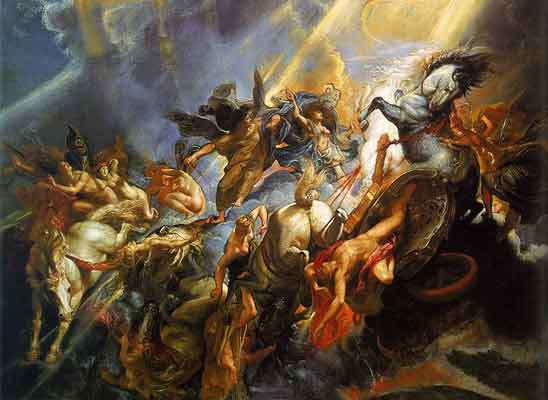
Helios, the sun god, drove a four-horse chariot across the sky each day, giving the earth its hours and seasons. He rose from a palace in the east and flew to another in the west. Each night, with his team and chariot, he boarded a golden ferry to sail home.
Helios had a mortal son named Phaeton. When the boy was taunted for claiming the god as his father, Phaeton asked Helios for proof of his parentage. In response, Helios promised Phaeton anything he wanted. Phaeton's request was to drive his father’s chariot. Although Helios realized that the boy lacked the strength and skill to control the horses, the promise had been made. With dread, Helios handed over the reins.
When Phaeton set out, the horses veered, first heavenward, cutting the swath of the Milky Way, then fell to earth. Winged figures representing the hours and seasons, gesture in horror as the pattern of night and day is disrupted. The blazing chariot scorched the earth creating deserts. The earth’s very future was threatened. Zeus, the king of the gods, was called to intervene. He hurled a thunderbolt at the chariot, sending it in a fiery plunge to earth. The nymphs who recovered Phaeton’s body were so bereft that they became trees and wept over him. Their tears became amber, the fossilized resin of trees.
Peter Paul Rubens was the most sought-after painter in northern Europe during the early seventeenth century. His rich colors, energetic brushwork, and lively compositions epitomize the exuberance of baroque art. Dominated by restless motion, his dynamic and emotional style is created through strong contrasts of color and light. The son of a lawyer, Rubens was a noted linguist and scholar, well schooled in ancient history and classical languages. He served the courts of Europe not only as a painter, but also as a diplomat, sometimes carrying out delicate negotiations while working on foreign commissions.
Rubens painted The Fall of Phaeton while he was studying in Italy from 1600 to 1608. He sketched a famous battle scene painted by Leonardo da Vinci and used some of the horses in it as models for his own painting.
GUIDED PRACTICE
1. What moment of the story has Rubens depicted? What happened in the story leading up to this moment? What will happen next?2. How did the artist use color and line to make this painting look so dramatic?
3. What natural phenomena does the story explain?
4. Rubens painted butterfly-winged figures to symbolize the hours and the seasons. Why might they be reacting in terror to the chaos they see?
5. Helios made a promise, and usually promises should be kept. If you were Helios, would you have kept your promise and allowed Phaeton to drive the chariot knowing what would happen to him and to the entire earth? Why or why not?
6. How would you describe Phaeton’s personality in insisting on driving the chariot? If you were Phaeton, would you have made the same choice? Why or why not?
*******************************************************************************

BACKGROUND
Dibutades was the daughter of a potter in ancient Corinth, a city in Greece whose wares first helped to establish the fame of Greek pottery. Hoping to keep a record of her boyfriend, who was departing the city, Dibutades traced the outline of his shadow on a wall while he slept. Her father filled in this silhouette with clay and fired it in his kiln. It became the first relief sculpture.
The figure of the youth is modeled after a sleeping Endymion that Joseph Wright of Derby, England, had drawn from a relief in Rome. He spent nearly two years there, recording ancient monuments and sculpture in his sketchbooks. The sparse furnishings, garments, and even the woman’s hairstyle are all based on archaeological evidence. The figures are arranged with a carefully measured rhythm along a narrow stage, as in a frieze or vase painting. A master of artificial illumination, Wright concealed a hanging lamp behind the curtain, suggesting the source of the beams that cast the youth’s shadow.
The painting was commissioned by Josiah Wedgwood, a pioneer of pottery manufacturing in England. His pottery copied the shapes of ancient vessels as well as their decoration, borrowing motifs from ancient glass, cameos, and relief carvings. Wedgwood’s fired clay vessels, decorated with low reliefs, can be seen as the descendents of Dibutades’ first relief sculpture.
GUIDED PRACTICE
- What moment of the story has Wright depicted? What will happen next? How do you think the boyfriend felt when he awoke and saw that a relief of him had been made?
- How does the artist use light and shadow to focus your attention on the action? Where does this light come from?
- The origin of what art form is explained by this story? On what objects do you see relief sculptures everyday?
- In this and many other representations of the same story, the young man is shown with a dog. Dogs are often used as symbols of faithfulness. Why might Wright have included a dog in this painting? After all, the dog isn’t doing much but sleeping.

Tuesday, May 7, 2013
Monday, May 6, 2013

HW for Monday, 5/6

Complete the "Greek Mythology Review" worksheet, and make sure your binder is organized -- tomorrow's quiz will be open notebook!
Thursday, May 2, 2013
HW for Thursday, 5/2

Tomorrow . . . lights, camera, ACTION!
Memorize your lines, bring in any remaining props or costumes, and be prepared to shine!
Wednesday, May 1, 2013
HW for Wednesday, 5/1

Bring in your props and costumes for your skit (which you'll perform Friday) and memorize your lines!
Tuesday, April 30, 2013
Monday, April 29, 2013
Friday, April 26, 2013
Daily Warm Up for Friday, 4/26

Study each of the 5 paintings listed on this site and answer the questions below each painting.
Once you've successfully completed that, try this:
Thursday, April 25, 2013
HW for Thursday, 4/25
Go to this site and create a Greek (and Roman) Myths crossword of your own! We'll share these with your classmates. You must have at least 20 clues, and those cluses must be about the characters listed below.
Be sure to read the directions very carefully . . .
http://puzzlemaker.discoveryeducation.com/CrissCrossSetupForm.asp
Perseus
Zeus
Hercules/Heracles
Medusa
Gaea
Uranus
Cronus/Kronos
Apollo
Artemis
Athena
Ares
Aphrodite
Hephaestus
Hermes
Hades
Persephone
Demeter
Helios
Pandora
Pan
Echo
Narcissus
Orpheus

Wednesday, April 24, 2013
HW for Wednesday, 4/24

1) Finish the WEBQUEST part 2 -- remember, complete one Greek Mythology Research Sheet for a god, and one for a goddess.
2) Read/listen to this Greek creation myth:
http://talesofwisdom.com/2008/06/greek-creation-myth/
Now, write 5 quiz questions about the myth -- be prepared for a quiz!
Daily Warm Up for Wednesday, 4/24
Take these quizzes on Greek mythology, How much do you already know?!
Now, tell me: which Greek God are YOU?
Tuesday, April 23, 2013
HW for Tuesday, 4/23

Read the circled parts of Greek Gods packet 1.
Write 10 quiz questions and be sure to include the answers.
We'll have a quiz on this material tomorrow. If I use your questions, you get extra credit!
Greek Mythology Web Quest

You will complete this WEBQUEST -- parts of it you'll do by yourself, and parts you'll do with a partner:
http://www.fairfieldschools.org/Rogerludlowe/crogerludlowe03/webquests/mythweb/
Friday, April 19, 2013
HW for Monday, 4/22

Finish the mythological products worksheet.
AND
Sign in and post a comment here. It should be . . .
5 questions you have about mythology
OR
5 things you'd like to learn about in a World Mythology class
OR
a combination of both!
Subscribe to:
Comments (Atom)